Selected work
Two pieces. One method.

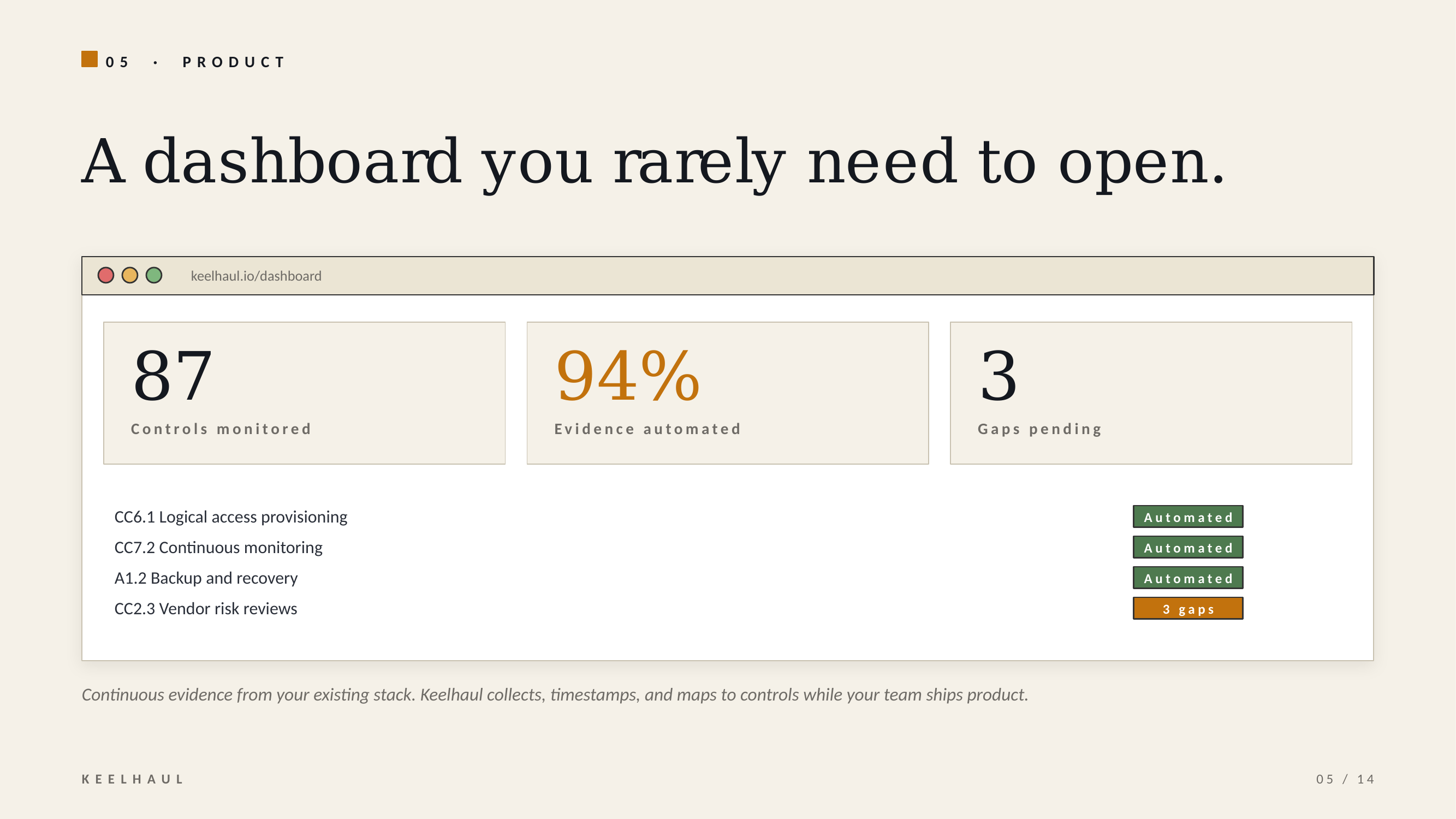

Spec · Compliance Automation
Keelhaul — a seed deck from scratch.
Keelhaul is a fictional SOC 2 automation company we built end-to-end to demonstrate what a Slatepress seed deck looks like: narrative arc, market sizing with visible arithmetic, competitive positioning, and a design system that holds across all fourteen slides.
Built to show craft, not to sell a real product.
View the deck (PDF) →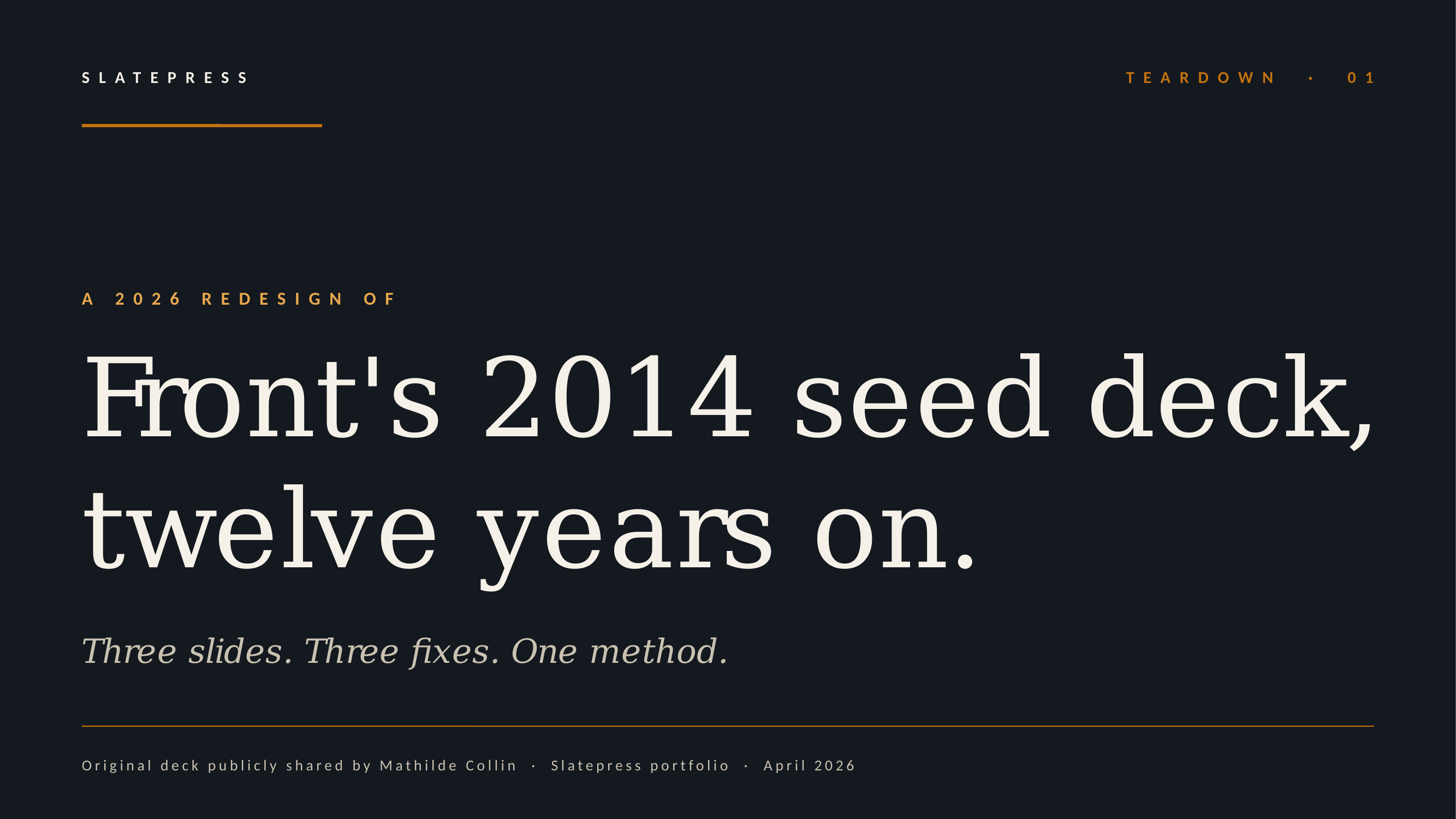
Teardown 01 · Front, Seed 2014
Twelve years on — what we'd change.
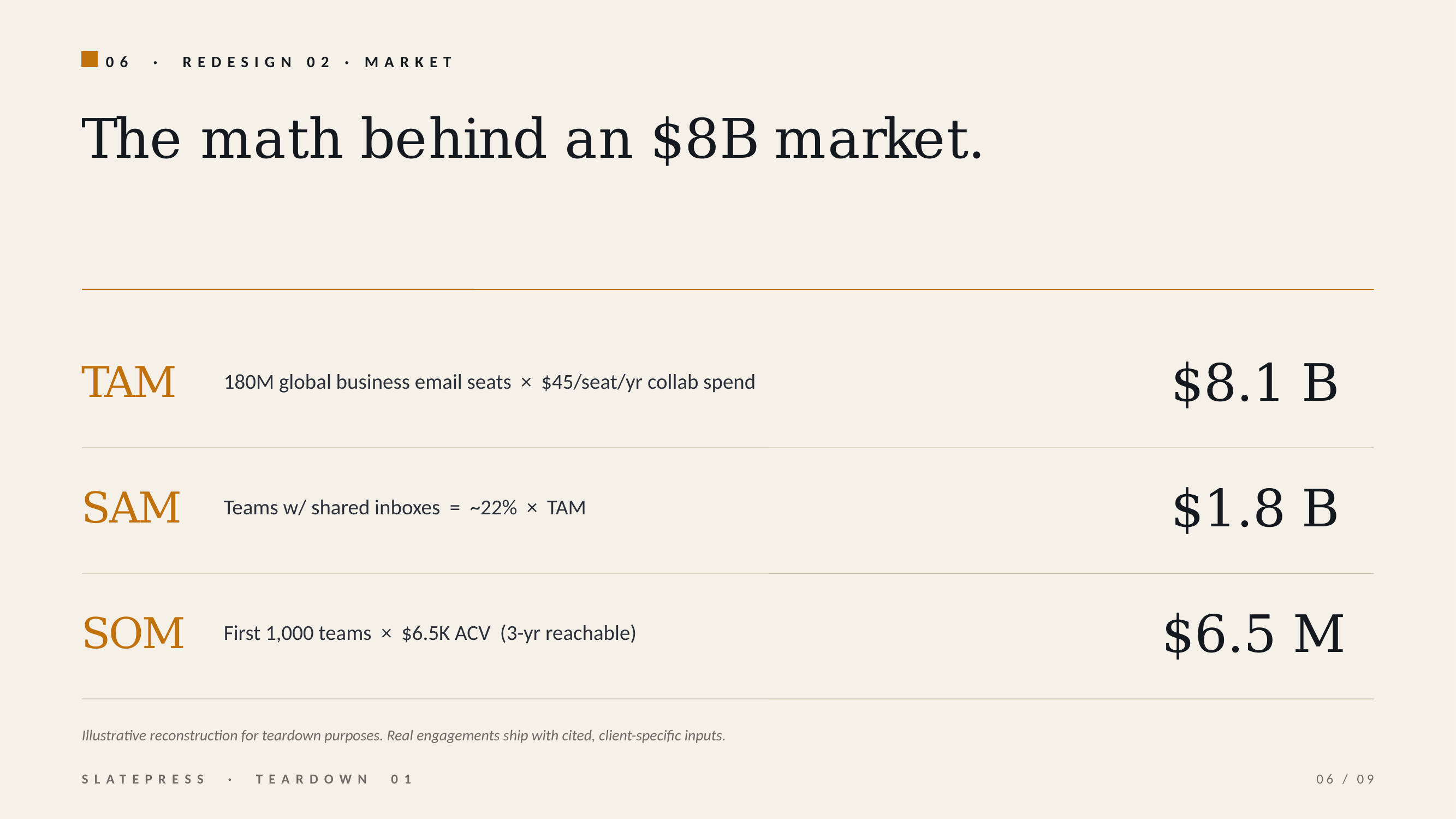
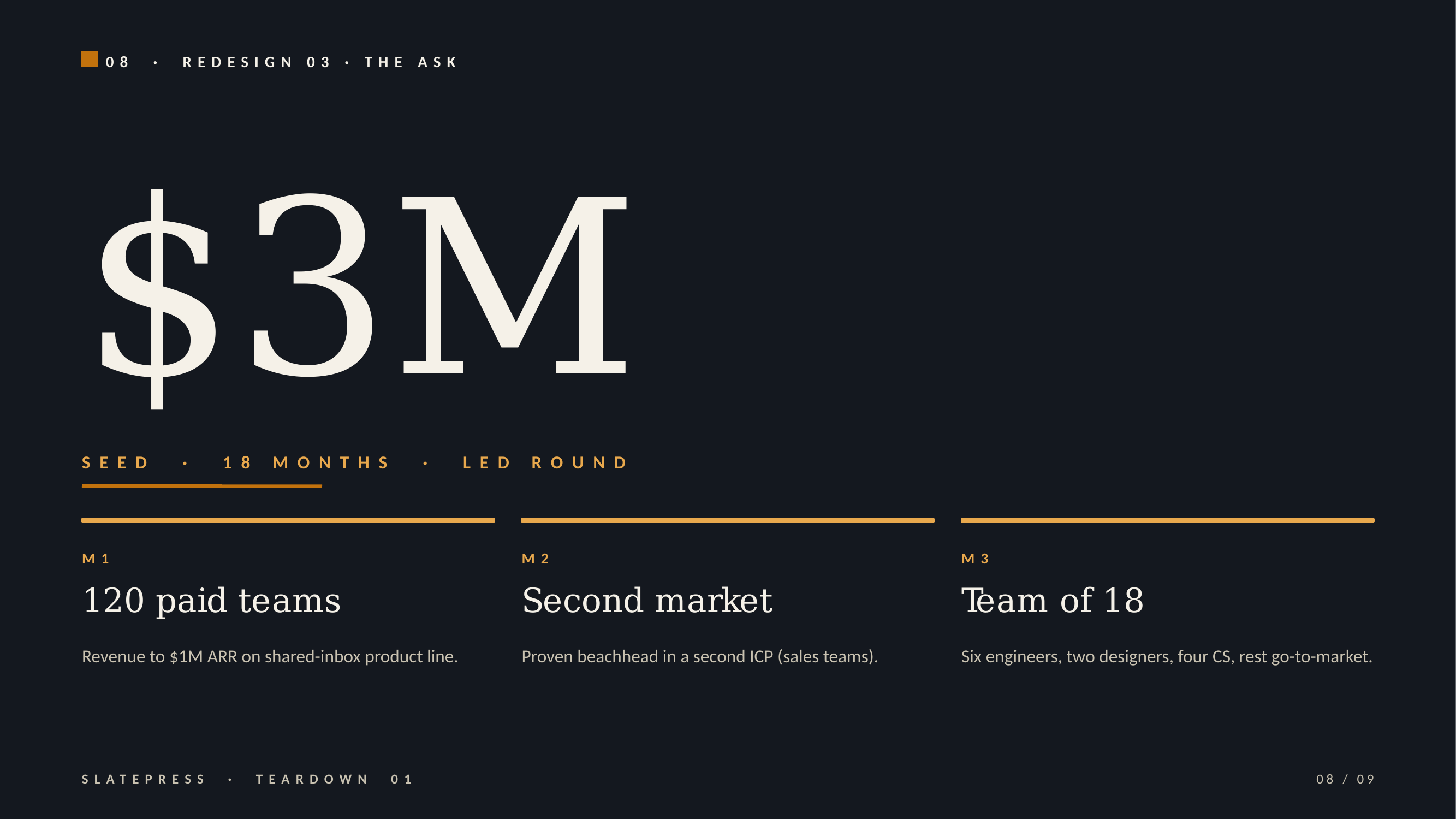
A respectful 2026 redesign of three slides from Front's publicly shared 2014 seed deck. The original worked — Front raised and became a category leader. But the conventions of a great seed deck have shifted, and this teardown shows what those shifts mean slide by slide.
Credit: original deck publicly shared by Mathilde Collin.
View the teardown (PDF) →